
English| EUR
Suggested for you
More currencies
Choose a language
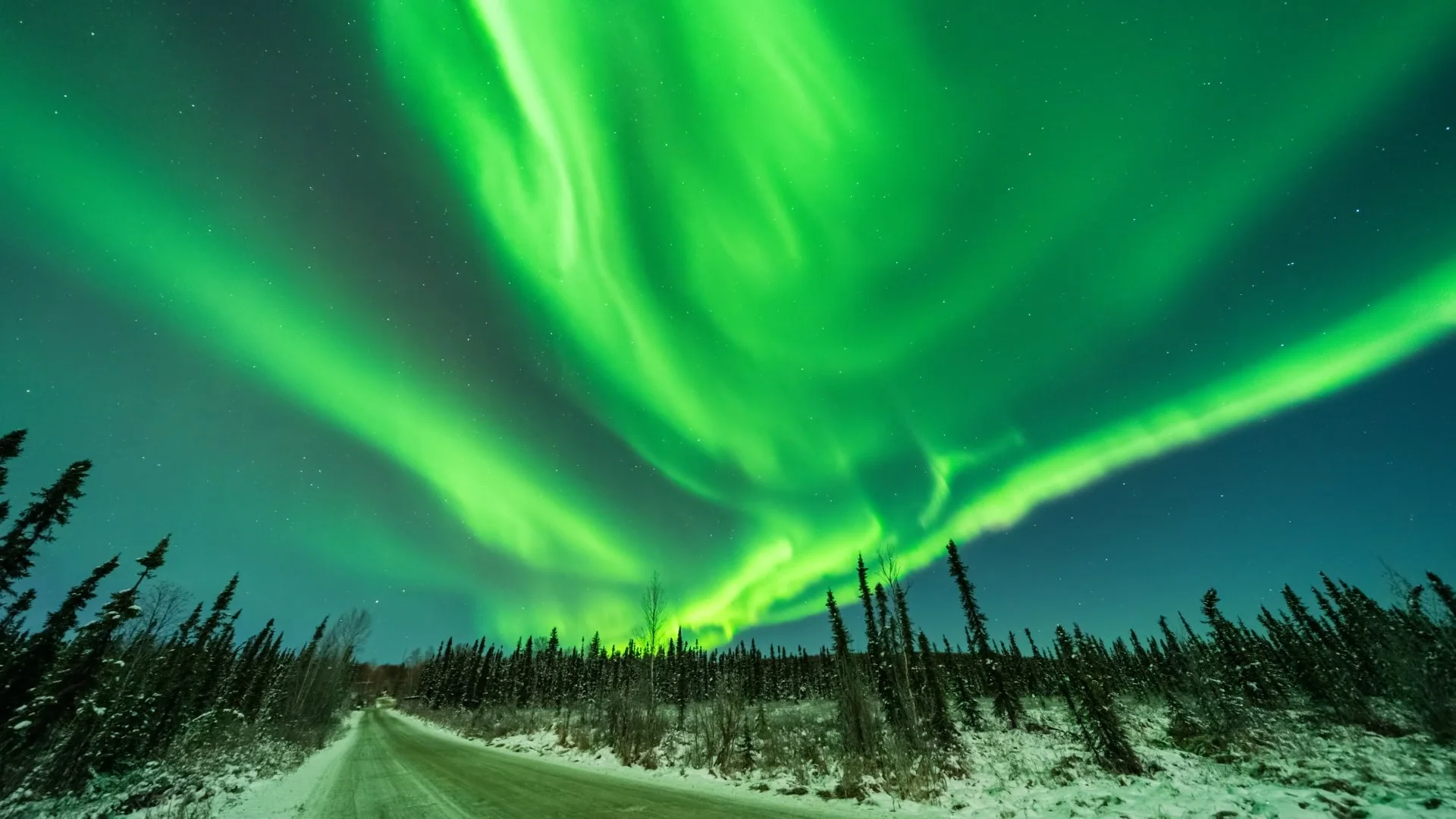
Fairbanks sits beneath the auroral oval, the ring of geomagnetic activity that circles the pole and passes almost directly overhead. That geography makes the city one of the most reliable land-based vantage points on the planet — but only across part of the year, and only after full darkness returns. This when can you see the northern lights in fairbanks alaska guide sets out the season, the nightly window, and the variables that matter.
Quick answer
Viewing is possible from roughly late August through mid-April, with 22:00–02:00 the optimal arrival window for darkness and peak auroral activity. There is no entrance fee — 0 USD — because the aurora is a natural phenomenon visible from public outdoor spaces at any hour. The caveat: cloud cover, not solar activity, is what most often ends a night early.
The aurora above Interior Alaska is not seasonal in the way most travellers assume. Geomagnetic activity continues year-round; what changes is the sky's ability to show it. Between late May and late July, Fairbanks receives close to twenty-two hours of usable daylight, and the residual twilight washes out even a strong display. Darkness, not the sun's temper, sets the calendar. This is the single fact that reframes the question of when can you see the northern lights in fairbanks alaska for anyone booking flights. The city's advantage is positional. Fairbanks lies under the auroral oval, a permanent ring of charged-particle collision that hovers over the sub-Arctic and drifts south during geomagnetic storms. Chena Hot Springs Road, Cleary Summit, Murphy Dome and the Steese Highway corridor all pull viewers away from municipal light pollution within an hour's drive, and the Arctic Circle crossing along the Dalton Highway pushes further under the oval still. Elevation helps for a practical reason rather than a poetic one: the Tanana Valley traps ground fog and ice haze, and ridge-top pullouts sit above it. The Geophysical Institute at the University of Alaska Fairbanks publishes a daily aurora forecast rating Kp activity, and locals treat its cloud-cover map as the more decisive of the two readings. Patience is the operative skill. A display can build slowly as a pale green arc along the northern horizon, hold that shape for an hour, then break into moving curtains within minutes. Many first-time visitors photograph the arc, decide the show is over, and leave before the substorm arrives. Three to four consecutive nights out is the standard local recommendation — it converts a single roll of the weather dice into reasonable odds. Access itself costs nothing, since the sky belongs to everyone and the roadside pullouts are public. What to do with all this is straightforward. Anchor the trip in the dark half of the year, allow multiple attempts, and choose a base or a guided Arctic Circle northern lights tour from Fairbanks that puts distance between the group and the city glow. Aurora viewing in Fairbanks rewards the traveller who plans for repetition rather than a single perfect evening. Readers still weighing months against work calendars will find the season breakdown and nightly timing detailed further down this when can you see the northern lights in fairbanks alaska guide, alongside route notes and preparation checklists for winter conditions in the Interior.
“Darkness, not the sun's temper, sets the calendar.”
Public outdoor viewing areas in Fairbanks remain accessible 24 hours a day to accommodate nocturnal auroral activity. While the sites are open continuously, visitors often concentrate their efforts during the late evening and early morning hours.
Viewing the northern lights in Fairbanks, Alaska, is a natural phenomenon occurring in public outdoor spaces, meaning there are no admission fees required to observe the sky. Costs associated with viewing only apply if you choose to book private tours or transport services.
Verdict: A typical adult pays 0 USD for self-guided viewing, though costs may vary if you select private tour services.
Fairbanks, Alaska, serves as the primary gateway for northern lights viewing. Accessing remote dark-sky locations requires careful planning, as most optimal spots are located outside the city center.
Elliott Highway to Dalton Highway
Fairbanks local transport providers
Private tour operators (via Parks Highway/Steese Highway)
For the best viewing conditions, plan your arrival between 22:00–02:00 when auroral activity is typically at its peak. Ensure your vehicle is equipped for winter conditions, as remote roads may be icy or unpaved.
Aurora viewing in Fairbanks means standing still outdoors in deep cold, so preparation is mostly about layers, battery power, and a plan for staying warm.
Everything you need to know about when can you see the northern lights in fairbanks alaska
You can typically view the aurora in Fairbanks during the darker months, generally between late August and mid-April. Since this is a natural phenomenon, when can you see the northern lights in fairbanks alaska depends heavily on clear skies and solar activity.
The best arrival window for peak auroral activity is between 22:00 and 02:00. During these hours, darkness is at its optimal level for observing the display.
There is no cost to view the aurora in public outdoor spaces, as the entrance fee is 0 USD. You only need to plan your travel logistics to reach a dark location.
While the season starts in late August, travelers often ask when can you see the northern lights in fairbanks alaska to plan their winter itineraries. Always check local weather forecasts and solar activity reports before heading out to remote locations.
Traveling toward the Arctic Circle provides higher latitudes, which can increase the frequency of sightings. This is why many visitors choose to book a dedicated aurora tour to reach these prime viewing latitudes.
The auroral season generally spans from late August through April when night darkness is sufficient. Determining when can you see the northern lights in fairbanks alaska requires checking for the dark, cloudless nights typical of this period.
The phenomenon is visible whenever solar activity is sufficient and the sky is dark and clear. Because the aurora is a natural event, sightings are never guaranteed regardless of the date.
Guided tours are available to help you navigate to the best viewing spots outside of the city lights. These tours provide the logistical support needed to maximize your chances during the primary viewing window.